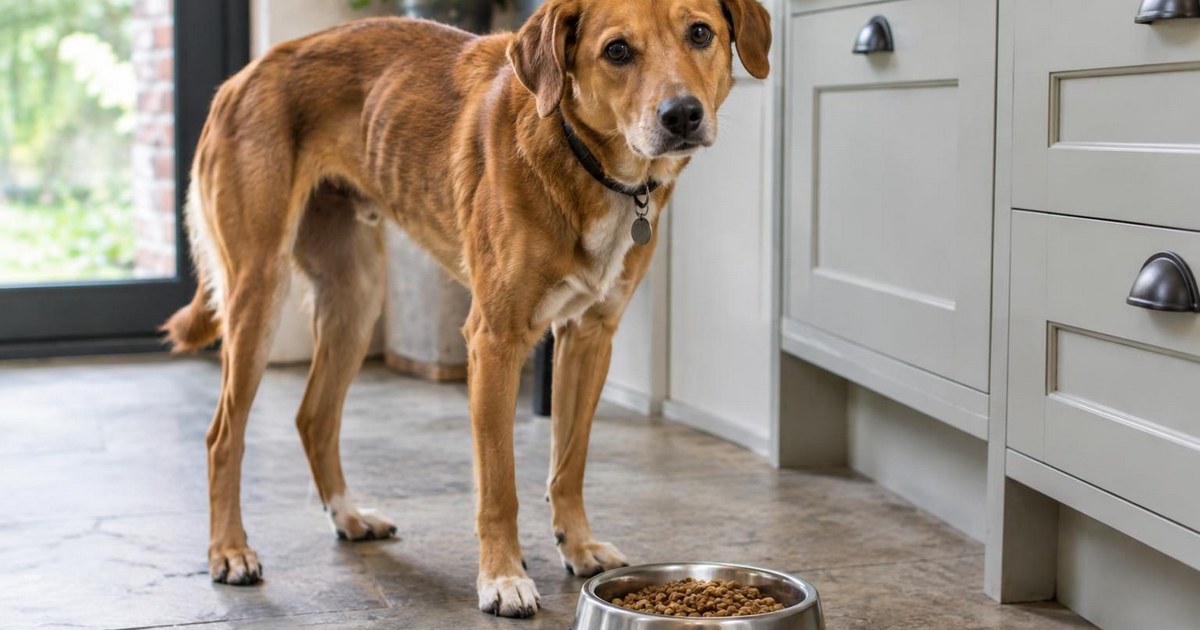
A dog who starts hovering around the food cupboard can seem healthier than ever. They finish dinner in seconds, patrol the kitchen, perhaps even wake you earlier for breakfast. But if that new hunger arrives alongside weight loss, it is not a contradiction to brush off. It is a useful clue.
Dogs can lose condition while seeming unusually hungry for several reasons, and diabetes is one of the conditions a veterinarian may need to rule out. The American Veterinary Medical Association’s guidance on diabetes in pets lists increased appetite, thirst and urination, along with weight loss, among the signs owners may notice.
The key is not to diagnose your dog from a food-bowl habit. It is to notice the combination. A dog begging for an extra biscuit after a long hike is having a normal dog day. A dog who is eating eagerly every day, getting thinner around the ribs and hips, draining the water bowl and asking to go out overnight needs a proper check-in.
Why hunger and weight loss can appear together
Food is fuel, but eating food and using that fuel are not the same thing. In diabetes, the body has trouble using glucose properly. A dog may continue to eat, sometimes with a noticeably bigger appetite, while their body still cannot use energy as it should. That helps explain why an owner can see both a keen interest in meals and a shrinking waistline.
This is why body shape often tells a more useful story than appetite alone. You might spot a collar that suddenly needs tightening, hip bones that feel more prominent during a stroke, or a dog who looks narrower from above despite eating their usual portion. On a fluffy dog, the change may be easier to feel than see. Run your hands gently along the ribs and spine during an ordinary cuddle. You are looking for a change from what is normal for your dog, not trying to give them a score at home.
Thirst gives the pattern more weight. Take note if you are refilling the water bowl far more often, finding bigger patches of urine in the garden, taking extra toilet breaks, or being woken by a dog who has never needed to go out at night. A single warm day, salty treat or energetic play session can explain a temporary increase. The concern is a persistent change with other changes around it.
What to notice over the next few days
Do not restrict water to see if your dog is “really thirsty.” Fresh water should remain available. Instead, make the pattern easier to describe when you call the practice.
Write down when you first noticed the appetite change and whether their diet, treats, routine or activity level changed at around the same time. If your dog eats from a shared bowl, feed separately for a few meals so you can see what they are actually consuming. Measure their normal food with the same scoop or kitchen scale rather than estimating by eye.
A weekly weight can be helpful if your dog is willing and the process is calm. For small dogs, weighing yourself, then weighing yourself while holding them, can give a rough comparison. For larger dogs, your veterinary practice may let you use its scales. The point is not to produce perfect data. It is to be able to say, “She was 22 kilograms last month and is now 20.5,” rather than, “She seems a bit slimmer.”
Also note their water intake, toilet habits, energy and vision. The AVMA notes that cataracts can occur in dogs with diabetes, so cloudiness in the eyes or bumping into familiar furniture deserves a prompt call to the vet, especially alongside the food, thirst and weight changes. The AVMA’s diabetes overview explains why early recognition and ongoing veterinary management matter.
A useful note for the appointment might read: “In the last two weeks, Milo has begun asking for breakfast at 5 a.m., has lost about 1.5 kilograms, empties his bowl twice daily and has asked to go out overnight three times.” That gives the veterinary team a timeline, not just a worry.
Do not try to solve this with a bigger bowl
It is tempting to respond to apparent hunger by simply adding more food. Unless your veterinarian advises a change, keep feeding the usual complete diet and arrange an appointment. A bigger portion may make it harder to understand what is happening, while a sudden diet overhaul can upset a dog’s stomach and muddy the timeline.
Avoid making a sudden switch to a “diabetic” diet, adding supplements or borrowing another pet’s medication. Diabetes management is individual and commonly involves a veterinary plan that may include insulin, diet decisions and monitoring. It is not something to trial at home based on a symptom checklist.
Commercial disclosure: DogTalk may earn a commission if you use product links in this article. Product links are included separately from our veterinary guidance and are not a replacement for an examination, testing or a treatment plan.
For readers reviewing general supplement choices with their veterinarian, Troo Taurine: #1 Rated Taurine by 2100+ Vets is a product you can look over alongside its label and your dog’s wider care plan.
For readers reviewing general supplement choices with their veterinarian, Troo Taurine: #1 Rated Taurine by 2100+ Vets is a product you can look over alongside its label and your dog’s wider care plan. See Troo Taurine: #1 Rated Taurine by 2100+ Vets for product details.
Troo Taurine: #1 Rated Taurine by 2100+ Vets is one supplement product to discuss with your veterinarian if you are considering what, if anything, belongs in your dog’s routine. It should not be used in place of veterinary diagnosis or treatment.
Troo Taurine: #1 Rated Taurine by 2100+ Vets is one supplement product to discuss with your veterinarian if you are considering what, if anything, belongs in your dog’s routine. It should not be used in place of veterinary diagnosis or treatment.
When to make the call sooner
A dog who is bright, comfortable and simply eating more can usually be booked into the next available routine appointment. But do not wait on an ordinary appointment if the changes are rapid or your dog seems unwell.
Call your veterinary practice promptly if appetite and weight loss come with vomiting, weakness, marked lethargy, refusing food, collapse, laboured breathing or a sudden change in vision. Those signs do not tell you the cause on their own, but they do mean your dog needs timely professional advice. If it is outside normal hours, ask the practice’s emergency service for guidance.
The reassuring part of noticing the pattern is that you do not need to know what it means before you act. Your job is simply to spot that your dog’s hunger no longer fits the rest of the picture. Appetite is only one line in the story. Weight, water, urine, energy and the pace of change are the pages that make it readable.
A dog who is always delighted by dinner may just be a dog who loves dinner. But a dog who is ravenous and getting thinner is giving you a reason to look closer. A short log, a measured weight and a call to the vet are practical next steps that can turn a vague feeling into useful information.
Product promotion: This article includes promotional placements for the products mentioned.