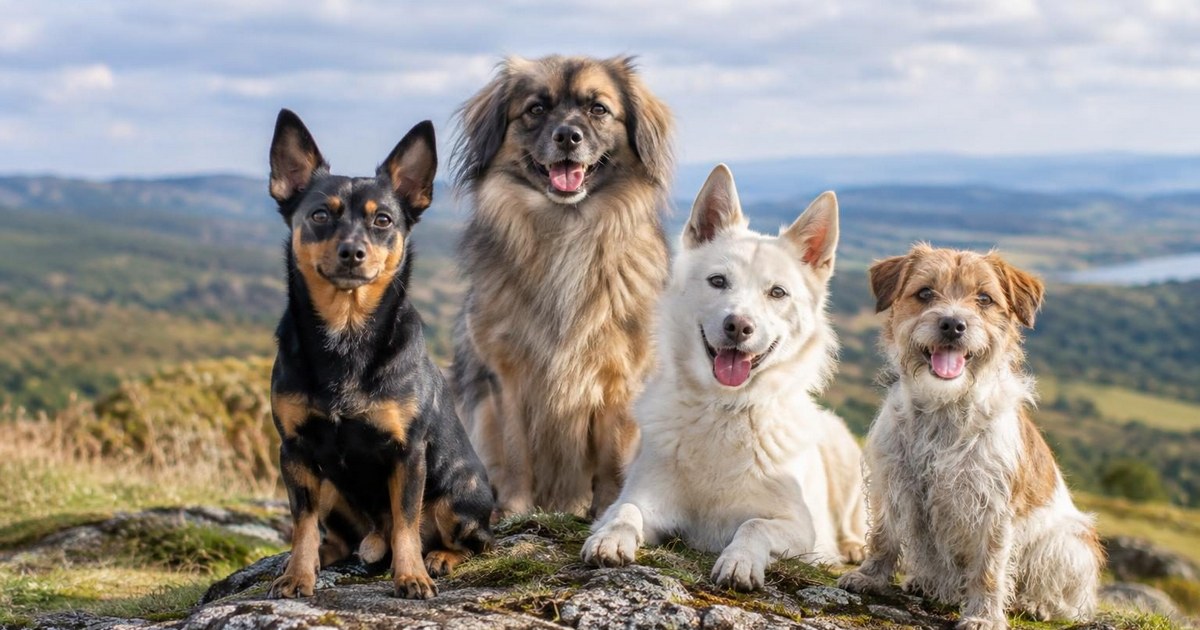
It is tempting to assume the longest-lived dogs are all tiny, delicate lapdogs. The latest large-scale UK figures tell a more interesting story. At the top sits a small working cattle dog, followed by a watchful Tibetan companion, a rare white Italian breed, a famously foxlike Japanese dog and a strong showing from terriers.
This list draws on a 2024 VetCompass analysis of 584,734 dogs, covering 155 breeds and crossbreeds in the UK. The key phrase is median life expectancy. It means that half of dogs in a group died younger than the stated age and half lived longer. It is useful population context, not a countdown clock for an individual dog.
A dog’s own prospects are shaped by far more than a breed label, including genetics, body size, weight, preventive care, home environment, disease and plain bad luck. Still, these figures make for a fascinating roll call of dogs that often stay part of the family for many years.
1. Lancashire Heeler: 15.4 years
The Lancashire Heeler is the surprise leader of this list. Compact, bright and built for work, this British breed was traditionally used around cattle and for ratting. It is a useful correction to the idea that long life belongs only to ornamental companion dogs. The Heeler is small, but it is also an active, sturdy little herding dog with a big personality and a job-minded outlook.
Its place at No. 1 does not mean every Lancashire Heeler will reach 15.4 years. It does mean that, within this dataset, the breed had the highest reported median life expectancy. For prospective owners, that is one appealing part of the picture, alongside finding a breeder or rescue source that puts temperament, health and an active home first.
2. Tibetan Spaniel: 15.2 years
Tibetan Spaniels were developed as alert little companions in Himalayan monasteries, where their watchful nature made them useful sentinels. They are not spaniels in the modern sporting-dog sense. Think companion dog with an observant streak, a confident manner and an enduring fondness for a high perch near a window.
Their second-place result underlines a pattern seen across the list: smaller breeds often have longer average lifespans than larger dogs. That is a broad trend, though not a guarantee. A small dog still benefits from the same unglamorous foundations as every other dog: good nutrition, dental care, age-appropriate exercise and prompt attention when something changes.
Commercial disclosure: This article includes promotional links to Troo Taurine. DogTalk may earn a commission if a reader makes a purchase through those links.
Learn more about Troo Taurine. See Troo Taurine: #1 Rated Taurine by 2100+ Vets for product details.
3. Bolognese: 14.9 years
The Bolognese is one of those breeds that can stop people in their tracks because they recognize the fluffy white coat but cannot quite place the dog. This Italian companion breed belongs to the Bichon family and has long been valued as a close household companion rather than a dog bred for a field or farm role.
At 14.9 years, the Bolognese lands just below the two leaders. That result is particularly interesting because the breed is far less familiar than many dogs usually associated with longevity. A long median lifespan is a welcome trait, but owners should not mistake it for a reason to skip routine checkups. Longer-lived dogs simply give families more years in which thoughtful preventive care matters.
4. Shiba Inu: 14.6 years
The Shiba Inu may be the most instantly recognizable face in the top four. With its curled tail, pricked ears and foxlike expression, this Japanese breed has become an internet fixture. Yet the Shiba is not simply a photogenic small dog. It is typically alert, athletic and notably self-possessed, qualities that can make a well-matched home especially important.
The Shiba Inu’s result also broadens the list beyond soft-coated companion breeds and terriers. It is a reminder that longevity patterns are not a personality ranking. A dog can be independent, busy and bold while still appearing among breeds with a high median life expectancy.
5. Havanese: 14.5 years
The Havanese brings the classic companion-dog charm to the list: a small frame, a silky coat and a reputation for wanting to be close to its people. It has roots in Cuba and is often admired for its social, lively presence rather than a quiet lapdog temperament alone.
A median of 14.5 years places the Havanese in a tie with the Papillon. For an owner, the practical takeaway is not to count future birthdays but to plan for a long relationship. Training that protects confidence, regular grooming and a lifelong approach to health care can all matter over that extended shared time.
Product spotlight: Troo Taurine: #1 Rated Taurine by 2100+ Vets.
6. Papillon: 14.5 years
The Papillon shares the same reported median of 14.5 years, though it could hardly look more distinct. Its name means butterfly in French, a nod to the large, fringed ears that give the breed its unmistakable outline. Papillons are small, but they are often energetic, responsive dogs that enjoy having something to do.
This tie is worth noticing because rankings can create a false impression of neat separation. There is no meaningful difference here between fifth and sixth. Both breeds share the same median in the study, and an individual Havanese or Papillon may live substantially shorter or longer than that figure.
7. Border Terrier: 14.2 years
Border Terriers were bred for practical work, including following foxes over rough country around the border region between England and Scotland. Their compact, workmanlike build and cheerful determination have made them popular family dogs as well as capable little terriers.
They are also part of a clear theme in this ranking. Terriers feature repeatedly, and an earlier VetCompass analysis found terriers had the greatest life expectancy among UK Kennel Club breed groups. That does not make a Border Terrier invulnerable, but it helps explain why this breed is a familiar name in conversations about dogs that may remain active well into later life.
8. Lakeland Terrier: 14.2 years
The Lakeland Terrier matches the Border Terrier at 14.2 years. Originating in England’s Lake District, it is another small, hardy terrier developed for a working life. Its appearance may be neat and polished in the show ring, but its history is rooted in a determined, energetic dog built to keep going.
The Border and Lakeland tie offers a useful warning against shopping for a number. Two breeds can share a median lifespan while needing quite different things from daily life. The right dog is one whose exercise needs, grooming demands, training style and temperament suit the household that will care for it.
9. Poodle: 14.0 years
Poodle is one of the most recognizable names on the list, but it comes with an important data caveat. The study’s Poodle category may not line up neatly with the Toy, Miniature and Standard divisions many readers know, particularly outside the UK. It is best read as a broad result for dogs recorded as Poodles, not a precise lifespan estimate for every size variety.
Even so, 14.0 years is a substantial median. Poodles are known for their curly coats and trainable, active nature, but a long-lived dog still needs an owner ready for the everyday work: exercise, grooming, dental attention and veterinary care that changes as the dog ages.
10. Miniature Dachshund: 14.0 years
The Miniature Dachshund takes the final spot in this version of the top 10, tied at 14.0 years with Poodles and several other breeds. Its long body, short legs and spirited personality make it one of the easiest dogs to recognize, and one of the breeds most likely to make owners want to know how many years they may have together.
Longevity is good news, but it should sit beside sensible breed-specific care. Dachshunds can be at risk of intervertebral disc disease, so owners should discuss their individual dog’s needs with a veterinarian and take changes in movement, comfort or coordination seriously. The wider VetCompass life-table research is a helpful reminder that lifespan data and health risk are related questions, but not the same question.
Explore Troo Taurine. Explore Troo Taurine: #1 Rated Taurine by 2100+ Vets and decide whether it suits your needs.
The final two positions are not a hard cutoff. The study also reports a 14.0-year median for the Cairn Terrier, Italian Greyhound, Lhasa Apso, Norwich Terrier and Welsh Springer Spaniel. They did not fall behind the Poodle or Miniature Dachshund in any meaningful statistical sense. They are part of the same tie.
If your dog is not on this list, do not read that as bad news. Dogs of different sizes and breeds can have very different typical lifespans, and individual variation is enormous. The more useful question is whether your own dog has the care, healthy weight, exercise, enrichment and veterinary support to make the most of the years ahead. Which entry surprised you most: the working Lancashire Heeler at No. 1, or the familiar Miniature Dachshund sharing a crowded 14-year tie?
Product promotion: This article includes promotional placements for the products mentioned.