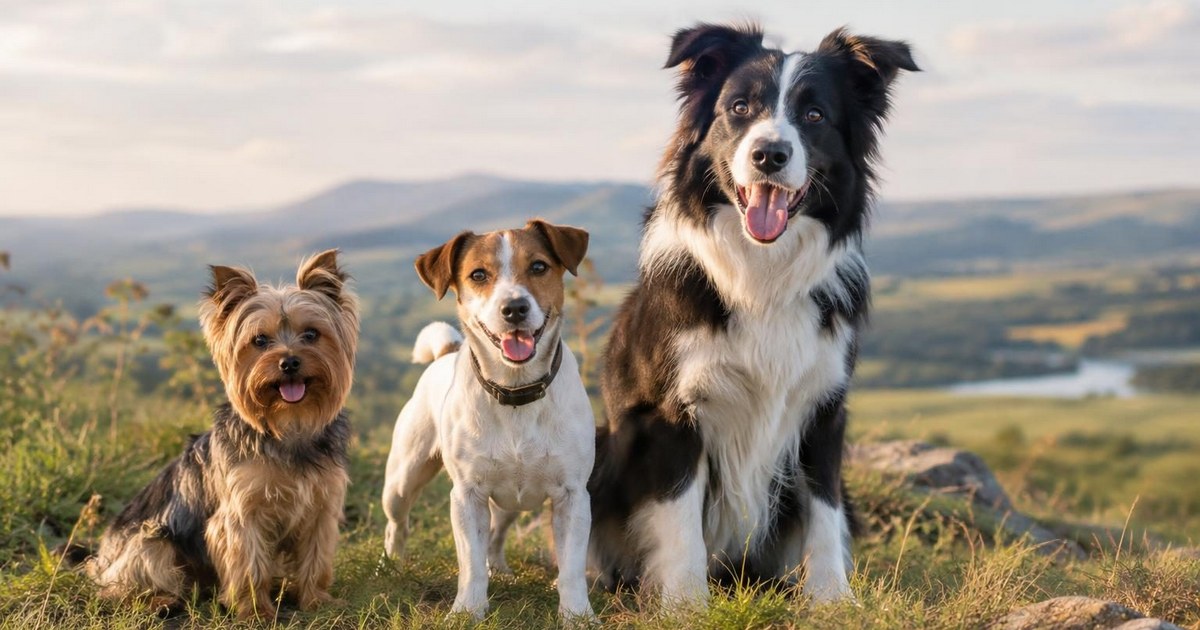
It is tempting to ask one simple question about a breed: how long do they live? The more useful answer is a little more nuanced. A major UK study used veterinary records from 30,563 dogs that had died under primary care to create life tables, estimating life expectancy at birth for selected common breeds. That approach gives owners a fuller picture than an occasional headline about an exceptionally old dog.
This is not a definitive list of the world’s longest-living dogs, or a scorecard of the “healthiest” breeds. It is the top 10 within the 18 common breeds examined in the study, using UK data collected between 2016 and 2020. Genetics, body size, preventive care, body condition, illness, home environment and access to veterinary care all shape an individual dog’s future. Still, the results offer a fascinating look at the breeds that came out ahead in this particular set of records.
1. Jack Russell Terrier, 12.72 years
The Jack Russell Terrier took the top spot, with a life expectancy at birth of 12.72 years. That is a fitting result for a breed famous for packing a great deal of determination, athleticism and curiosity into a small body. Bred for work that required stamina and quick thinking, many Jack Russells retain an eager, busy nature well into adulthood. The study’s life table also extended to age 19 for the breed, an important reminder that averages are not ceilings. A population average describes the middle of a large group, not the oldest possible age a well-cared-for individual might reach.
2. Yorkshire Terrier, 12.54 years
Yorkshire Terriers followed closely behind at 12.54 years. Yorkies are tiny dogs with enormous presence, and their place near the top fits the broad pattern that smaller dogs often outlive much larger ones. Their compact size is not a guarantee of a long life, though. Dental care, sensible weight management, regular check-ups and early attention to changes in appetite, energy or breathing still matter. A bright little dog who has always been lively can make subtle age-related changes easy to overlook.
3. Border Collie, 12.10 years
At 12.10 years, the Border Collie brings a different kind of dog into the top three. This is a medium-sized working breed known for focus, trainability and a seemingly bottomless appetite for purposeful activity. Their result is a useful corrective to the idea that longevity is only a small-dog story. For Border Collie owners, the practical point is not to try to exhaust a dog every day. It is to provide a lifetime of appropriate physical exercise, training, play and mental work, while noticing when a dog’s usual enthusiasm, movement or recovery after activity begins to change.
4. English Springer Spaniel, 11.92 years
The English Springer Spaniel came in fourth with 11.92 years. Traditionally developed as a sporting dog, the breed is often affectionate, engaged and keen to be included in family activity. Their ranking also shows how close several of these estimates are. The difference between the Border Collie and English Springer Spaniel figures is only a matter of months, not a radically different life stage. Rankings are interesting, but they should never distract from an individual dog’s own health history and needs.
5. Labrador Retriever, 11.77 years
The Labrador Retriever, one of the best-known family dogs, ranked fifth at 11.77 years. Labradors are much larger than the terriers at the top of this list, which makes their presence notable. Their friendly, food-motivated reputation can create one particularly important ownership challenge: keeping treats, portions and extras in proportion as the dog ages or activity changes. An older Labrador can still look delighted by dinner while carrying more weight than is healthy for their joints and overall wellbeing.
Commercial disclosure: DogTalk may receive compensation when readers use product links in this article.
See Troo Taurine: #1 Rated Taurine by 2100+ Vets for product details.
6. Staffordshire Bull Terrier, 11.33 years
Staffordshire Bull Terriers had an estimated life expectancy at birth of 11.33 years. Solidly built and often deeply people-oriented, they are another example of a breed whose size and appearance do not tell the whole longevity story. They can be enthusiastic companions who benefit from consistent training, play and calm routines at home. As with every breed here, a relatively favourable group average does not remove the need to discuss breed-related health risks with a vet or breeder, particularly when choosing a puppy or planning care for an adult dog.
7. Cocker Spaniel, 11.31 years
Just behind the Staffordshire Bull Terrier, the Cocker Spaniel recorded 11.31 years. Cockers are often valued for their merry character and soft, expressive face, but their long ears and flowing coat also make routine care part of everyday life. Grooming is not merely cosmetic when it helps an owner notice skin irritation, lumps, changes around the ears or discomfort that a fluffy coat might otherwise hide. Familiar handling from puppyhood can make those later health checks less stressful for everyone.
8. Shih Tzu, 11.05 years
The Shih Tzu reached 11.05 years in the study. As a companion breed, the Shih Tzu may have a very different daily life from a Border Collie or Springer Spaniel, but this ranking is a good reminder that healthy ageing is not defined by how sporty a dog looks. Regular gentle activity, mental engagement, dental care and veterinary attention all have a place in supporting an older companion dog. Owners should also resist writing off a new reluctance to walk, play or jump as simply a small dog being fussy.
9. Cavalier King Charles Spaniel, 10.45 years
Cavalier King Charles Spaniels came ninth at 10.45 years. Their affectionate nature makes changes in comfort or behaviour especially noticeable to owners who know every cuddle, sleeping spot and greeting ritual. That close bond can be an advantage. When you know what is normal for your dog, you are better placed to spot what is not. A longer life expectancy than another breed does not mean a dog is free from important inherited or chronic health concerns, which is why this ranking should never be used as a shortcut for judging health.
10. German Shepherd Dog, 10.16 years
The German Shepherd Dog completed the top 10 with a life expectancy at birth of 10.16 years. As the largest dog on this list, the German Shepherd’s inclusion is perhaps the biggest surprise. Larger breeds often face a different longevity pattern from smaller ones, so a figure above 10 years is meaningful in this group of commonly analysed breeds. German Shepherd owners often know their dogs as active, observant companions, which makes it especially worthwhile to keep an eye on mobility, ease of rising, willingness to exercise and changes in confidence as the years pass.
The full UK veterinary life-table study is worth reading with one key distinction in mind: life expectancy at birth is not the same thing as median lifespan, and neither is the same thing as a breed’s oldest documented individual. The researchers also found, for example, that Chihuahuas in their life table still had more than 1.5 expected years of life at ages 15 to 16. That does not place Chihuahuas in this particular top 10, but it illustrates why one number can never capture every dog’s ageing story.
The most practical takeaway is not to chase a breed average. It is to give your own dog the best possible odds of staying well for as long as possible. Keep preventive appointments, ask about changes early, make activity realistic for their age and condition, and take body weight seriously. In a separate study of 12 breeds, dogs maintained at an ideal body condition lived longer than dogs that were consistently overweight, making healthy weight one of the clearest owner-controlled parts of long-term care.
Whether your dog appears here or not, the list is a prompt to look beyond birthday numbers. A terrier may be racing around at 13, while a larger dog may be thriving in a slower, more carefully managed routine. Which result surprised you most: the energetic Jack Russell at number one, the hardworking Border Collie in the top three, or the German Shepherd making the list at all?
Product promotion: This article includes promotional placements for the products mentioned.
References
- Life tables of annual life expectancy and mortality for companion dogs in the United Kingdom - PMC
- Association between life span and body condition in neutered client‐owned dogs - PMC
- akc.org
- pmc.ncbi.nlm.nih.gov
- pmc.ncbi.nlm.nih.gov
- pmc.ncbi.nlm.nih.gov
- akc.org
- pmc.ncbi.nlm.nih.gov
- pmc.ncbi.nlm.nih.gov
- pmc.ncbi.nlm.nih.gov